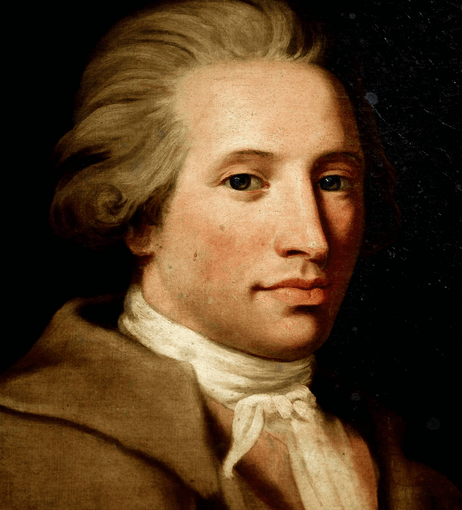
In later life when he lived at Bath William Beckford devoted a good deal of his time to revising texts that he had written as a young man. He read many of these improved versions to visitors who included his daughter Susan and her husband Alexander Hamilton, the 10th duke of Hamilton.
On 15 July 1839 Beckford read three passages of his new writing to the duke: ‘Devonshire House fete, 22 March 1782’; ‘Palazzo Courtenay, 12 February 1782’; ‘Charles Grevile’s house & Lady Home, May 1783′. The text of the second is transcribed here from the manuscript held in the Beckford Papers at the Bodleian Library in Oxford (England).
Sir William Courtenay of Powderham had taken the lease of 16 Grosvenor-square in 1755 when he was a member of parliament for Devonshire and before he became the first viscount Courtenay. The house was sited on the north side of the square, towards the north-east corner with Duke-street. Passing to the second and third viscounts (sir William’s son and grandson), the house was to remain the Courtenays’ London home until July 1804. William, the third viscount, then sold the remainder of the lease to Richard Howard of Castle Rising. After William’s lifetime, the house was renumbered as 17. Damaged by bombing in 1940, it was demolished in 1943.

12 Feb: 1782
We were all in high glee this fair morning at the Palazzo Courtenay – giggling & romping at a glorious rate – coursing each other up & down stairs through all the rooms in transports of hilarity – To increase our happiness, the famous dancing dogs made their appearance in the square – there was Don Lelio in his Field Marshal’s uniform, la Signora Rosalba in her slatternly silk petticoat & la Contessa Dorothia in her preposterous hoop – Let us have them up, cried the Children & so we will, cried I, by all the powers of the Nursery, & up they came & set to dancing with great solemnity – Don Lelio in spite of his imposing uniform had rather a currish look – a cast of the retired turnspit – but the Contessas drooping paws as she wimbled along ~ were quite sentimental – – The conductor, a wizzend, baboonical Piedmontese, very formal and serious, was plying his squeaking fiddle most ruefully, when a musical thought darted into my brain with such vehamence that I rushed to the harpsichord & fell a playing, with all my soul, & with all my might a sort of minuet, so flowing, so grand & at the same time so tenderly voluptuous, that Sacchini hallood out from the next room, where he was giving a lesson to C. C. [Charlotte Courtenay, sister of the second viscount], Aspetta – Aspetta – “I moost write dis down”, and so he did, bestowing upon it very extravagant commendations.
~ Both Lady Mount Edgecombe & Lord Abingdon, who happened to come in during the most fervent paroxysm of my musical “estro”, appeared delighted beyond bounds, & kept praising not only the composer of the minuet but the dancers – in the most enthusiastically glowing terms, repeating again & again how admirable! how divine! Not so divine, very gravely said the sneaking Piedmontese under a strong suspicion of being quizzed, not so divine – – poor things! “hanno la gratella” – – You shall have this famous* minuet if I can get it out of Sacchinis clutches, – if not, I will try to write it down myself, shorn of accompaniment & of that etherial spirit which, ten to one, has already evaporated.
~~~~~~~~~~~~~~~~~~~~~~~~
* famous it was doomed to become, for the great Maestro turned it into a Chorus for female voices, & placed it “sans ceremonie”, & without adding or diminishing a note, in the 1st act of his Œdipe –
Music
- The first act of Antonio Sacchini’s Oedipe à Colone includes the chorus Allez regner, which can be heard here: https://www.naxos.com/CatalogueDetail/?id=8.660196-97.
Images
- Elizabeth-Louise Vigée Le Brun, portrait of Antonio Sacchini | Wikimedia Commons
- engraving by Thomas Gaugain after painting by George Morland (1790), Dancing Dogs | https://www.metmuseum.org/art/collection/search/378010 | © 2000–2024 The Metropolitan Museum of Art
Page history
2025 October 20: first published online.
 William Courtenay (1768-1835)
