
In 1751 Frederick prince of Wales died at Leicester-house, his home in Westminster (England). As the eldest son of queen Caroline and king George II, he had been expected to succeed his father as king of Great Britain and Ireland; Leicester-house had become a focus of opposition to the politics of his parents and their ministers.
Frederick married princess Augusta of Saxe-Gotha-Altenberg in 1736; they had 9 children and it was their eldest son who succeeded his grandfather in 1760, becoming king George III.
After Frederick’s death, collections of elegiac verses were gathered at the two English universities and published together later in the year. One of the contributors at Cambridge was Charles Lock, a cousin of the Thomas Lock who married William’s aunt Anne Clack before taking up residence at Newcastle (county Limerick, Ireland).
Charles Lock attended Rochester grammar school and st. John’s college at Cambridge (England) before being ordained in 1757 as a church of England clergyman. In 1763 he was elected a priest-vicar at Exeter cathedral and in 1775 was presented by the second viscount Courtenay as rector of North Bovey (Devon, England). When Charles died in 1801 a local diarist, Silvester Treleaven commented: ‘He was universally esteemed by his Parishioners, and by all who knew him‘. His verses appeared on pages 156 and 157 of the published book.
THE
ENGLISH POEMS
COLLECTED FROM THE
OXFORD AND CAMBRIDGE
VERSES
ON THE
DEATH OF HIS ROYAL HIGHNESS
FREDERICK
PRINCE OF WALES.
EDINBURGH: PRINTED FOR HAMILTON BRUCE, MDCCLI.

By Charles Lock, of St. John’s College
SAY ye, whose philosophic breasts defy
And scorn the childish impotence of tears,
Heave not your hearts with the contagious sigh,
While ev’ry eye replete with grief appears?
What tho’ in that serene retreat ye dwell,
Where sacred Virtue, with Religion join’d,
Mocks the vain terrors of the dreaded knell,
And guides to immortality the mind;
While the destroying angel stalks abroad,
Are ye not mov’d at weeping Britain’s woe?
Earthquakes presag’d the long impending rod;
And FREDERICK’s death compleats th’avenging blow.
In him Britannia’s second glory fled;
Whose breast, with ev’ry social grace refin’d,
Improv’d th’endearments of the marriage bed;
Britain’s great patron, friend of all mankind.
Him Nature form’d the regal helm to guide,
Nor less to shine in ev’ry private scene;
Nor could the pomp of state those virtues hide;
But gave them strength, and rais’d them to be seen.
He ne’er the visionary bliss enjoy’d,
That from the smile of fickle Fortune flows:
His nobler foul sublimer themes employ’d,
Themes that the hero’s bosom only knows.
But yet to others, bountiful, as great,
He gave those pleasures which himself could scorn;
Sav’d the poor orphan from impending fate,
And bless’d the children which are yet unborn.
See where the silent, the ingenuous tear
Steals down the weeping merchant’s hardy cheek,
While from his bosom bursts the sigh sincere,
That tells the sorrow which he cannot speak!
Ask, why commercial Industry restrains
Her busy hand? great FREDERICK’s death the cause—
To pay due honours to his last remains,
Trade droops her head, and Pleasure makes a pause.
Did he not patronize each useful art?
Peculiar glory of his father’s reign,
We saw with joy the new erected mart,
And Plenty rising from the British main.
Alike his care the cottage and the court;
To him their love reciprocally shown;
His smile their bliss, his bounty their support:
Their hearts the basis of his future throne.
But why persists the elegiac Muse
To aggravate the heart-corroding pain?
Britons will ne’er this much-lov’d FREDERICK lose,
While royal GEORGE and Brunswick’s line remain.

In all seventy-three men were credited for contributing verses to the collection (women were not admitted to either English university until 1869 at Cambridge, and even then were barred from taking a degree). Their work was published in the following order:
OXFORD VERSES
- The Right Honourable David Lord Viscount Stormont, B. A. Student of Ch. Ch.
- Frederick North, M. A. Eldest Son of the Lord North and Guilford, of Trin. Coll.
- Sir John Davie, Bart. of Magd. Coll.
- Allen Bathurst, Fellow of New Coll. Third Son of the Right Hon. Lord Bathurst
- Sir Lambert Blackwell, Baronet, of Queen’s College
- M. Cholmeley, Fell. of Magd. Coll.
- James Fortescue, D. D. Fellow of Exeter Coll.
- George Smith, A. M. Fellow of New College, and Senior Proctor
- Joseph Spence, M. A. of New College, Professor of Modern History
- William Dobson, L. L. B. of New Coll.
- Foote Gower, M. A. Fellow of Brazen-Nose College
- James Clitherow of All-Souls Coll.
- J. Huckell, B. A. of Magd. Hall.
- W. Parker, M. A. Fell. of Baliol Coll.
- W. Newcome, A. B. Scholar of Pembroke College
- Tho. Patten, Gent. Com. C. C. C.
- S. Musgrave, C. C. C.
- T. Tournay, A. B, of Lincoln Coll.
- J. Estridge, Gent. Com. of C. C. C.
- William Fane Sharpe, Student of Christ Church
- John Heskin, A. B. Student of Christ Church
- J. Sampson, B. A. Fellow of Merton Coll.
- Benjamin Kennicott, A. M. Fellow of Exeter College
- S. Bradbury, Commoner of Wadham Coll.
- Henry Flood, Gent. Com. of Christ Church
- Tho. Panting, Scholar of Linc. Coll.
- Rob. Lane, Gent. Com. of Christ Church
- Gustavus Guy Dickens, Student of Christ Church
- Ben. Pye, Civilian of New Coll.
- Dan. Lysons, B. A of All-Souls Coll.
- Cha. Jenkinson, B. A. of Univ. Coll.
- Sam. Gwinnett, of All-Souls Coll. Chor.
- Steph. Beckingham, Gent. Com. of Trinity Coll.
- Phil. Rashleigh, Gent. Com. of New Coll.
- Rowland Berkeley, Gent. Commoner of New-Coll.
- James Gyles, B. A. Student of Ch. Ch.
- Enoch Markham, Student of Ch. Ch.
- Sam. Bishop, Coll. D. J. Bapt. Schol.
- Stanley Burrough, B. A. Taberdar of Queen’s College
- John Whetham, Fellow-Commoner of Trinity Coll.
- Rob. Lowth, M. A. of New College, Professor of Poetry
CAMBRIDGE VERSES
- George Blount, Fellow-Commoner of St. John’s Coll.
- Phillip Bennett, M. A, Fellow of Magdalen College
- T. Paget, M. A. Fellow of King’s Coll.
- William Hirst, B. A. of St. Peter’s Coll.
- Rob. Richardson, B. A. of Emmanuel Coll.
- Thomas Nevile, M. A. Fellow of Jesus College
- Thomas Cole, of Queen’s College
- J. Duncombe, B. A. C. C. C.
- F. Montagu, Fellow-Com. of Trin. Coll.
- Phil. Parsons, of Sidney College
- W. Bell, of Magdalen College
- John Hinchliffe, of Trinity Coll.
- John Image, B. A. of St. John’s Coll.
- Christopher Hervey, Fellow-Commoner of Clare-Hall
- Erasmus Darwin, of St. John’s College
- J. G. King, of Gonvil and Caius College
- J. Parkhurst, B. A. of Clare-Hall
- Gilbert Carter, of Caius College
- Kennet Gibson, of Christ’s College
- James Marriott, of Trinity Hall
- Edward Dering, Fellow Commoner of St. John’s Coll. eldest son of Sir Edw. Dering, Bart.
- Charles Lock, of St. John’s College
- R. Cumberland, A. B. of Trinity College
- J. Cranwell, M. A. Fellow of Sidney Coll.
- Fr. Maseres, of Clare Hall
- Jeff. Ekins, of King’s College
- P. Maseres, of Clare-Hall
- Richard Bempde Johnstone, of Pembroke Hall
- J. Sharp, B. A. of C. C. C.
- Geo. Graham, B. A. Fell. of King’s Coll.
- James Charles Hitchcock, B. A. of Pembroke Hall
- R. Long, D. D. Master of Pembroke Hall, and Lowndes’s Professor of Astronomy and Geometry

Images (from the top)
- Philip Mercier, The music party, 1733; Frederick prince of Wales and three of his sisters. © National Portrait Gallery, London. NPG 1556.
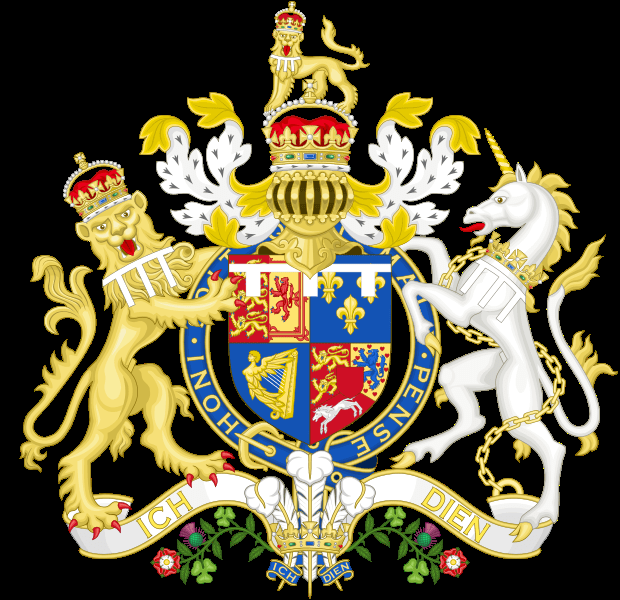
- Coat of arms of the hanoverian princes of Wales. Wikimedia commons.
Page history
- 2023 July 30: first published online.
 William Courtenay (1768-1835)
.svg)